Home / Services
Raleigh · Cary · MorrisvilleLawn Insect & Disease Control in Raleigh, NC
Treatment for grubs, armyworms, brown patch and other fungal diseases, from a turf team that checks your lawn on every visit.
 Lawn & Order crews
Grubs and Armyworms in Raleigh Lawns
Two pests do most of the damage to Triangle lawns. Grubs feed on roots under the surface, so the first sign is often turf that peels back like carpet or birds and moles digging for them. Fall armyworms move fast in late summer, chewing a green lawn brown in a few days, especially Bermuda and freshly seeded fescue. We treat both, and the sooner we see them the less turf you lose.
- Grubs: turf that lifts easily, wilting in spots
- Armyworms: fast-spreading brown areas in late summer
- Moles, birds or skunks digging for food
What Causes Brown Patch in Fescue?
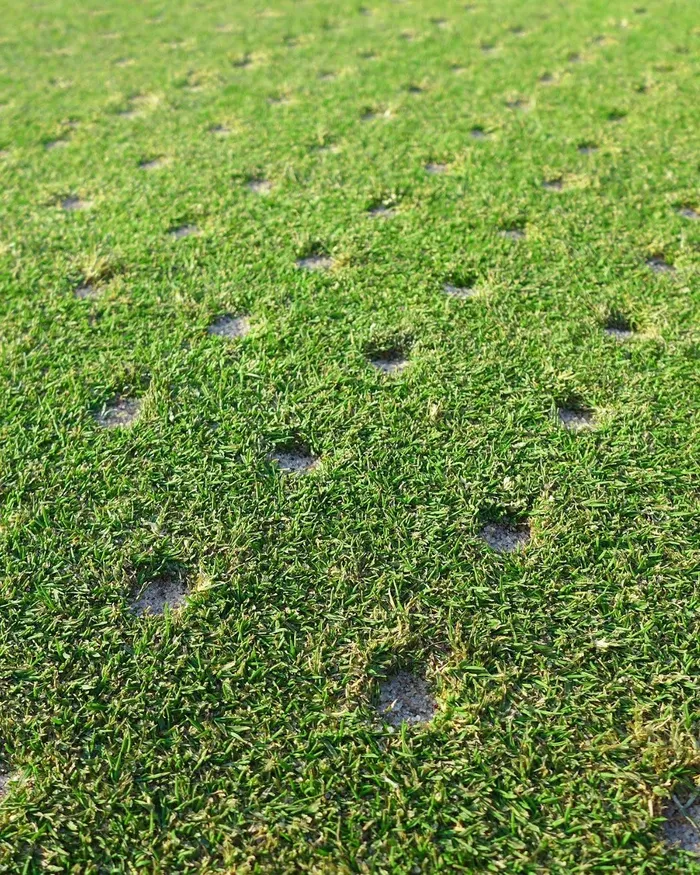
Brown patch is a fungus that shows up when hot, humid nights keep fescue wet, which describes a lot of North Carolina summers. It starts as tan circles and can spread across a shaded or heavily watered lawn. We treat active disease, and we look at the causes too: watering at night, thick thatch and compacted soil all make it worse. Sometimes the fix is a watering schedule, sometimes it's aeration and new seed in the fall.
Diagnosing Lawn Problems Before Treating Them
Dead spots can come from insects, fungus, dog spots, dull mower blades or a broken sprinkler, and each one needs a different fix. Our turf team looks at the pattern and the roots before choosing a treatment, so you aren't paying for a product that won't help. If the cause is something like drainage or irrigation, we'll tell you and send the right crew.
Lawn Insect & Disease Control FAQ
Still have a question? Call the office and you'll talk to someone who knows the answer.
How do I know if my lawn has grubs?
Pull up on a brown area. If the turf lifts easily with few roots and you see C-shaped white larvae in the soil, it's likely grubs. Call us and our turf team will confirm it.
Will a brown lawn come back after disease?
Grass often recovers once the disease is controlled and the weather cools. Areas that are fully dead are usually reseeded in the fall.
Is insect and disease control part of your turf program?
Our turf team checks for problems on every visit. Treatments for active insects or disease are discussed with you before they're applied.
Other Services You Might Need
What Our Customers Say
 Find Us on Google
Contact Us
Tell us about your property and what you need. Our office will get back to you with next steps.